Identify
Record model, serial range, manual revision, connected accessories and recent configuration changes.
SUPPORT ROUTE
Identify the model and serial range, then add input power, process, consumables, displayed fault and the event that preceded it. That sequence separates application questions from service faults.
DIAGNOSTIC SEQUENCE
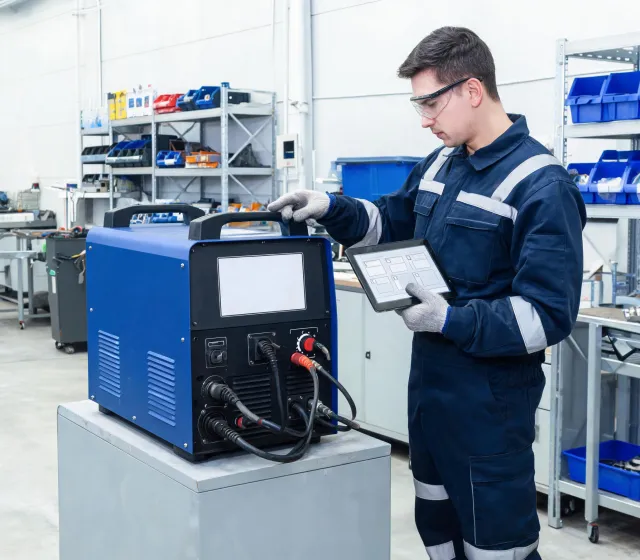
Use the horizontal record in order. Skipping identification or power checks can send a support request toward the wrong component path.
Record model, serial range, manual revision, connected accessories and recent configuration changes.
Verify voltage, phase, protection, plug or hardwire condition, generator loading and extension-lead length.
Inspect work lead, polarity, feeder path, gas delivery, torch or gun, consumables and cable connections.
Capture displayed fault, operating mode, settings, ambient condition and the exact sequence that causes the symptom.
Submit the record without opening protected electrical sections or bypassing guards and interlocks.
Write rated amperage and voltage beside the percentage of the reference period. Also note ambient heat and airflow obstruction. A thermal stop under one condition does not prove the same limit under another.
State polarity and process mode. For TIG, distinguish AC aluminum work from DC steel or stainless work. For MIG, record wire type, diameter, shielding gas and transfer mode.
Include measured supply information where authorized, branch-circuit protection and whether a generator is involved. Installation work belongs to qualified electrical personnel under the applicable manual.
HANDOFF NETWORK
The support path is shorter when application, electrical installation, service and welding-procedure responsibilities remain distinct.
Reviews material, joint, process, output range, consumables and representative coupon requirements.
Uses the machine record and approved procedures for inspection, fault isolation and parts decisions.
Addresses supply, branch circuit, grounding and installation work within local electrical requirements.
Controls procedure qualification, operator authorization, inspection points and production release.
Remote guidance cannot verify internal electrical safety, replace an authorized service inspection, or qualify a welding procedure. Stop work when guards, leads, insulation, grounding or the operating environment are unsafe.
Attach the operating context in words: identification, power, process path, symptom and safe reproduction steps.